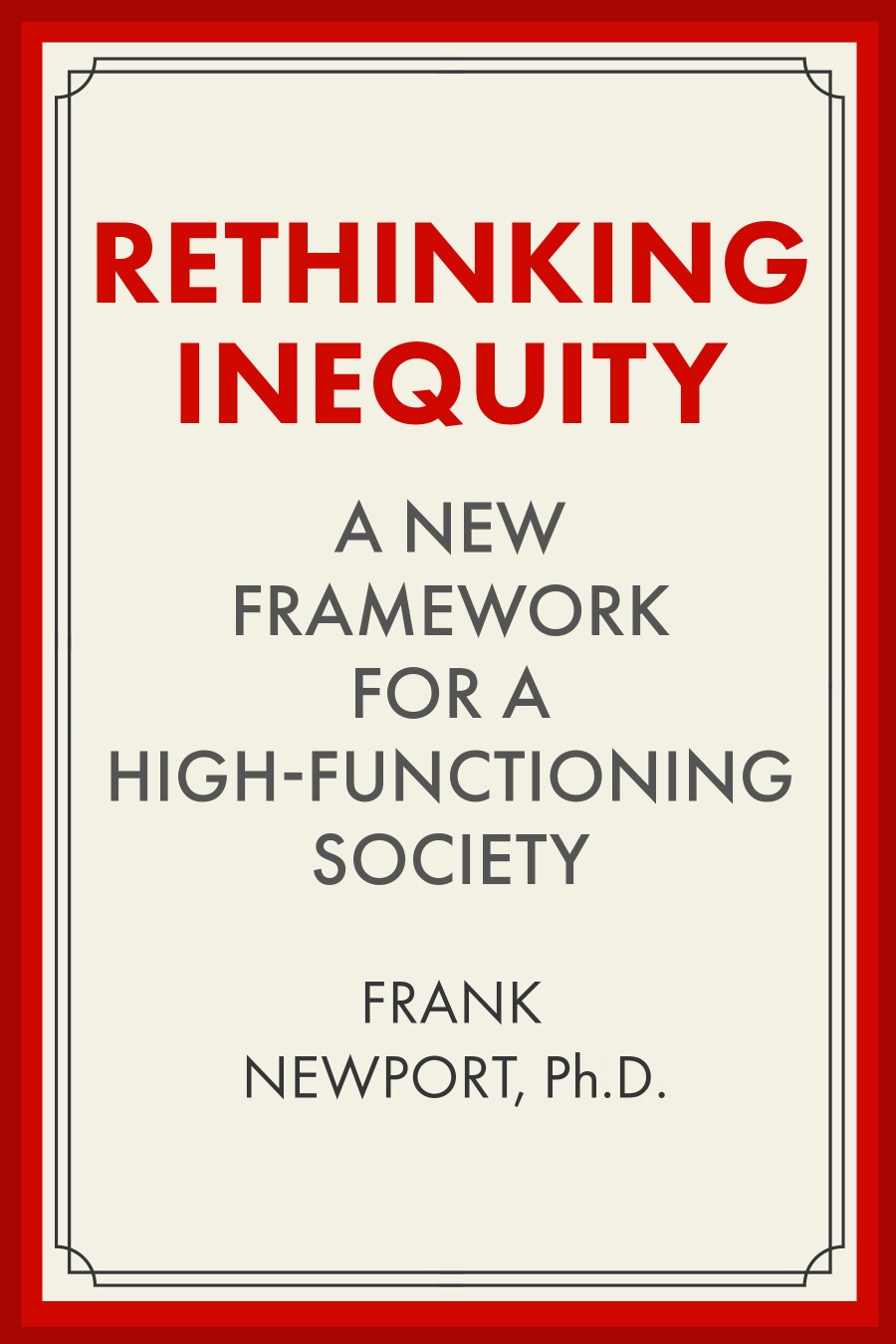

Rethinking
Inequity
A New Framework for a High-Functioning Society
By Frank Newport, Ph.D.
How can society harness the full abilities of its people while sustaining a shared sense of equity?

FOUNDATIONS
The intellectual roots behind Rethinking Inequity — decades of research in sociology, public opinion, and social structure that shaped this framework.

Flawed Measures
Current measures of inequity are philosophically and practically ill-conceived.

NEW FRAMEWORK
A powerful new model that balances ability and perceived equity — offering a practical path toward a high-functioning society.

Elevating the People’s Voice
The inherent value in perceptions of inequity from the actual people involved.
“A high-functioning society must balance ability with a shared sense of fairness.”
— Frank Newport, Ph.D.
ABOUT THE BOOK
Rethinking Inequity goes beyond conventional thinking to explore one of society’s most pressing challenges — how to balance performance, opportunity, and fairness.
Using decades of research in sociology and public opinion, Rethinking Inequity presents a fresh framework for understanding how societies function, how inequity is measure, and how perceptions of fairness shape outcomes.
- READER INSIGHTS
Thought-Provoking. Insightful. Transformative.
Readers and thought leaders are engaging with Rethinking Inequity as a powerful new perspective on society, fairness, and human potential.
"A compelling and deeply insightful framework. This book challenges conventional thinking and offers a refreshing way to understand equity in modern society."
- Get The Rethinking Inequity Chronicles newsletter
- The Core Idea
Equity and Ability Are Both Essential
A high-functioning society must accomplish two objectives simultaneously: 1) match people with roles in ways that make effective use of their abilities, 2) maintain perceived equity.
Rethinking Inequity proposes a framework for doing both.
Rethinking Inequity focuses on the absolute necessity of maximizing the ability of society’s members while addressing criticisms and philosophic pushback from this seemingly straightforward principle.
But what of perceived inequity? The book provides a major reconsideration of the highly flawed but highly used method of measuring equity — ascriptive accounting — or the process of counting people with certain ascriptive characteristics and then comparing those proportions to the underlying population.
Rethinking Inequity proposes a new method of measuring inequity based on the actual perceptions of the people involved, not metrics developed by distant elites.
A New Format and Structure
Rethinking Inequity is designed to convey information to the reader and to stimulate thinking about new approaches to inequity in American society. Nonfiction “idea” books tend to present key points filled out by expanded (and often bloviated) narrative. Rethinking Inequity is an attempt to change things up, conveying information and perspective to the reader as directly as possible. The book uses an innovative format that cuts the bloviation and filler out of the main narrative while guiding the reader through the book’s key points. Examples and extended discussions are in sections set off by boxes and horizontal bands. This is unusual and in some ways controversial for traditionalists, but the format is designed to optimize the reader’s reading enjoyment and ability to acquire new and enlightened understanding.
Stay Updated
Get the latest news, behind-the-scenes stories, and exclusive updates.
- Rethinking Inequity
A New Framework for a High-Functioning Society
Available in paperback and Kindle.